
Officiating kindly
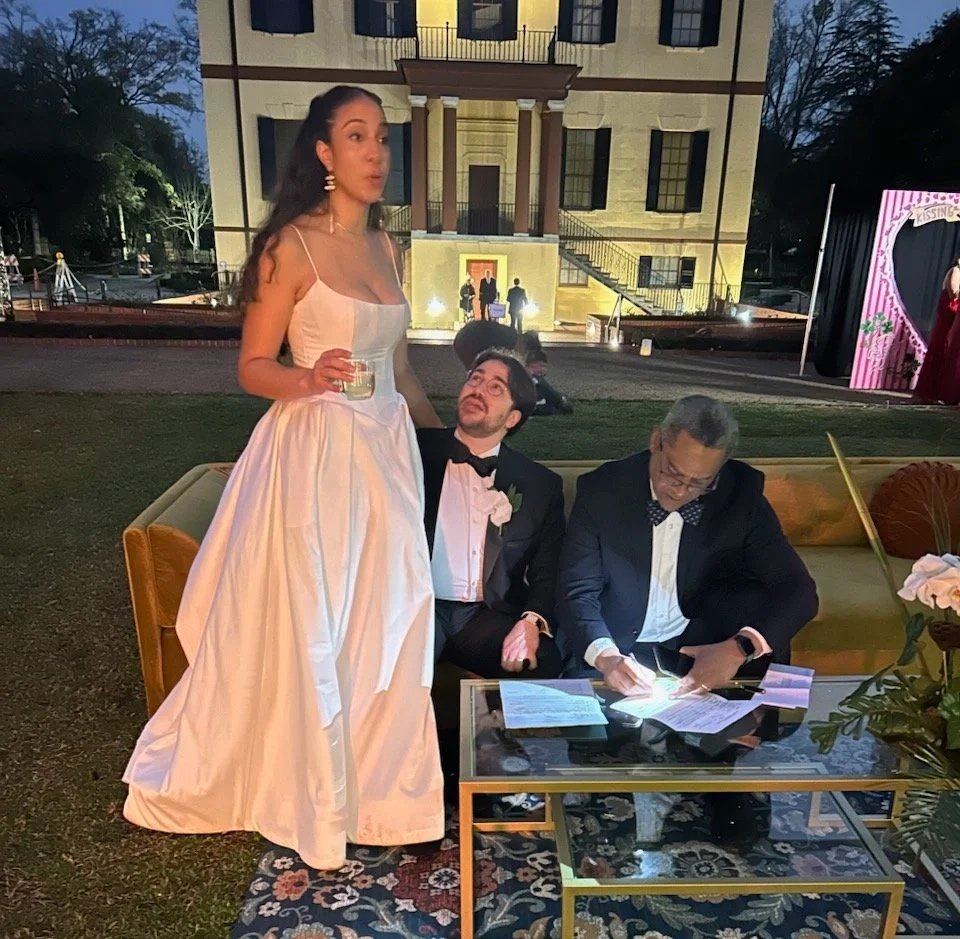
Signing the marriage document with the bride and groom.
Recently, I had the honor of being an officient at a wedding. My niece, who lives in South Carolina with her now husband, asked me to officiate at their wedding ceremony. I didn't expect this at all. That said, when she made the request, my only thought was, of course, I will say yes. I considered it an honor. I got a marriage license, then I thought about my role as the officient.
What do I do and say at this occasion other than the obvious, " Do you take this man to be your husband...” and "Do you take this woman to be your wife”? Even with those statements, I needed to ensure I was meeting the bride and groom's expectations. I asked both for general thoughts on how they met. Then I thought long and hard about what message I should share on their wedding day. They asked me to deliver a message of about 10 minutes. As I thought about this, one concept kept coming to mind. It's the concept of “snailtolka”. Snailtolka is a Swedish term meaning "to interpret kindly." I learned this several years ago in a meeting. I wrote about this two years ago in my blog, here. One of the first things we did in this meeting was talk about how to communicate and the importance of assuming the good intentions of the person you're communicating with.
Here is some of what I said and the weddingthat day
Welcome to this historic event on a beautiful day, which is also the last day of Black History Month.
I feel like I should warn everyone because I am a weeper. I'm a grown man prone to crying at weddings, so know that if you see tears, they're obviously tears of joy.
There are many ways to love each other. I've done a little research, and there are apparently at least seven different love languages. They include
1. Appreciation: Thanking and praising your partner for making your life better.
2. Activity: Doing fun things together, like going out or trying new hobbies.
3. Emotional: Feeling listened to and cared for, especially when you’re upset or need support.
4. Financial: Showing love by giving gifts, saving for special times, or helping with money.
5. Intellectual: Talking about interesting and sharing these topics, sharing books, ideas etc or listening to podcasts together.
6. Physical: Giving hugs, cuddles, and physical intimacy.
7. Practical: Helping each other with chores, errands, and everyday tasks.
With this list there's a swirl of opportunities to communicate love, ways to reach out and show our partners how we love them.
That said, life will inevitably happen around all of those things. And sometimes our love languages will not align. One may want more appreciation, while the partner wants something physical; or one may want more activities, dates, and hobbies, while the other wants more emotional connection. All of this can lead to confusion and disappointment, which brings me to the main theme of my time here today.
It's a word I learned a few years ago. I was in a room full of people speaking many different languages. In this case, not love languages, but Spanish, English, Swazi, Portuguese, French, and Swedish. One of the first things we did was have a conversation about communication. During that talk, someone introduced a word I’d never heard. This word and this concept helped us bridge some of our language differences and to be kinder to each other.
The word is Snälltolka.
This word captures the heart of what makes a relationship work:
"Snälltolka." It means "to interpret kindly,"
It means having the intent to understand and giving each other the benefit of the doubt. It involves assuming that the person you are interacting with is good-hearted and doing their best, even if their communication is poor or results in a misunderstanding.
It is a conscious, active choice not to build hostile narratives without evidence.
So, it's a generic Tuesday morning and your partner is doing that thing that drives you crazy. What do you do? Snälltolka.
When that special occasion rolls around (you know the one) and your partner did their best, but your expectations aren't met. What do you do? Snälltolka.
It’s about believing the best in the one you love, even when you’re tired, even when you disagree, even when life gets complicated. It’s about the courage to keep the dialogue open, having the humility to apologize, and the grace to assume good intentions.
So, when you face challenges, return to the conversation, listen, seek understanding, and practice Snälltolka. That’s how you can keep your love strong and your connection deep.
Today, we celebrate a love that’s not just passion but also, hopefully, patient —a love that will endure because we want this bride and groom to keep talking and to interpret each other’s words and actions with kindness and trust.
There is a lot going on in our world right now. A lot of division and hate. To that, I have this quote
"I know it's tough not to hate these days. Sometimes, we get contaminated, and the hate gets more powerful with more hate. The only thing that is more powerful than hate is love. So please, we need to be different. If we fight, we have to do it with love." Bad Bunny
So, as you begin this new adventure, may your marriage be filled with laughter and long conversations. May you always Snälltolka each other’s words. May you remember that the heart of a lasting love is not just in saying "I do," but in saying, every day, “I’m still here. I’m still talking. And I still believe in us.”
May your love always be stronger than anything that comes your way, and may your conversation never end.